Best TVs in 2026: A Buying Guide by Use Case
There's no single "best" TV — it depends on your room. For a dedicated, dimmer viewing room, an OLED like the LG C-series or Sony Bravia OLED delivers the deepest black levels and widest viewing angles. For a bright living room, a high-brightness mini-LED QLED like the Samsung QN90-series or TCL QM-series fights glare far better. Budget shoppers should look at the Hisense U-series, which punches well above its price tier on peak brightness.
Check price on Amazon →- The best overall pick for most rooms is a mid-range mini-LED QLED — it balances brightness, price, and picture quality better than entry OLED or basic LED.
- The best OLED for a dedicated dark or dim room is the LG C-series tier, prized for near-infinite contrast and wide viewing angles.
- The best TV for bright rooms is a high-brightness mini-LED QLED such as the Samsung QN90-series — OLED can wash out under strong window light or overhead lighting.
- The best budget pick is a mid-tier mini-LED set from Hisense or TCL, which now offers local-dimming performance that used to be a flagship-only feature.
- Regardless of panel type, pair any new TV with an HDMI 2.1 cable and a soundbar — both are bigger real-world upgrades than most people expect.
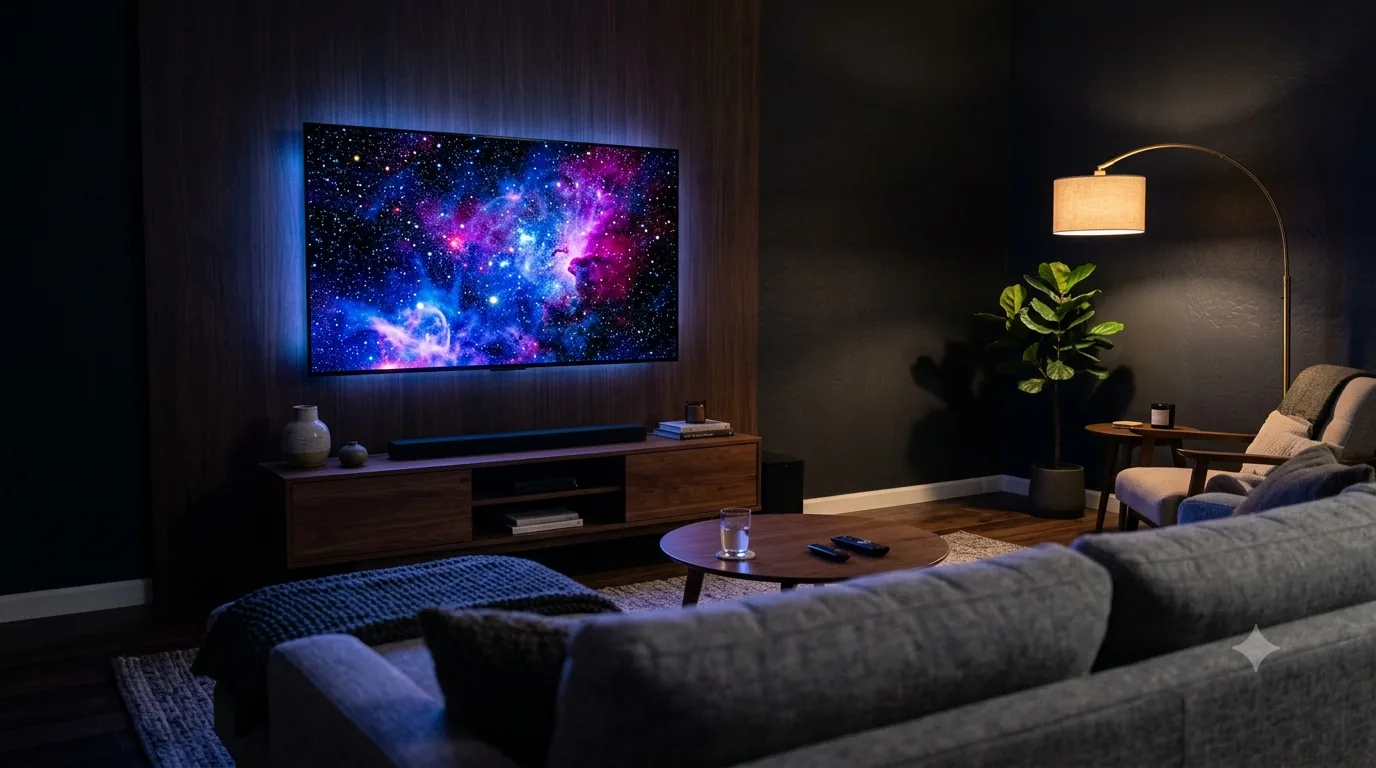
Quick Comparison: 2026 TV Picks by Category
| Feature | LG C-series OLED | Samsung QN90-series | Sony Bravia OLED | TCL QM-series | Hisense U-series |
|---|---|---|---|---|---|
| Panel Type | OLED | Mini-LED QLED | OLED | Mini-LED QLED | Mini-LED ULED |
| Peak Brightness | Moderate (OLED-class) | Very high | Moderate (OLED-class) | High | High for the price tier |
| Best-Suited Room | Dim / dedicated room | Bright living room | Dim / dedicated room | Bright / mixed lighting | Bright / mixed lighting |
| Gaming Features | 4K/120Hz, VRR, ALLM on all HDMI ports | 4K/120Hz, VRR, ALLM | 4K/120Hz, VRR, ALLM | 4K/120Hz, VRR, ALLM | 4K/120Hz on select ports |
| Price Tier | Flagship tier | Premium tier | Flagship tier | Mid-range tier | Budget tier |
Best Overall: A Mid-Range Mini-LED QLED
For the majority of households — mixed lighting, a mix of streaming and sports and gaming, and a single TV serving the whole family — a mid-range mini-LED QLED is the pick that satisfies the most use cases at once. Sets in the Samsung QN90-series or TCL QM-series tier combine strong peak brightness (important for daytime sports and bright rooms), full-array local dimming zones that control blooming far better than older edge-lit LED TVs, and 120Hz gaming support with VRR and ALLM across their HDMI ports. They sidestep the two big OLED anxieties — burn-in risk from static content like news tickers or video game HUDs, and reduced visibility in bright rooms — while still delivering picture quality that would have been considered flagship-tier just a few years ago.
✓ Pros
- Handles bright rooms and daytime viewing far better than OLED
- No burn-in risk from static content
- Full 4K/120Hz gaming support on current mini-LED flagships
- Generally more affordable than OLED at large screen sizes
✗ Cons
- Black levels and contrast still trail true OLED
- Viewing angles narrower than OLED — off-axis seats see washed-out color
- Local dimming can still show mild 'blooming' halos around bright objects on dark backgrounds
Best OLED: LG C-series (or Sony Bravia OLED)
If your TV lives in a room you can dim — a home theater, a media room with blackout curtains, or just a living room you mostly watch at night — OLED remains the picture-quality ceiling. Every pixel emits and controls its own light, so blacks are truly black (not "very dark gray") and contrast is effectively infinite. Viewing angles are dramatically wider than any LED-based panel, which matters if your seating is spread across a wide couch or sectional. The LG C-series has been the reference mid-flagship OLED for several generations running, with Sony's Bravia OLED line competing hard on picture processing and color accuracy, often at a premium-tier price.
✓ Pros
- Best-in-class contrast and true blacks
- Widest viewing angles of any panel type
- Instant pixel response — ideal for fast motion and gaming
- Thinner, lighter panels than most LED-based TVs
✗ Cons
- Lower peak brightness than mini-LED QLED — struggles in very bright rooms
- Small but real long-term burn-in risk with static content
- Sits in the flagship/premium price tier at larger screen sizes
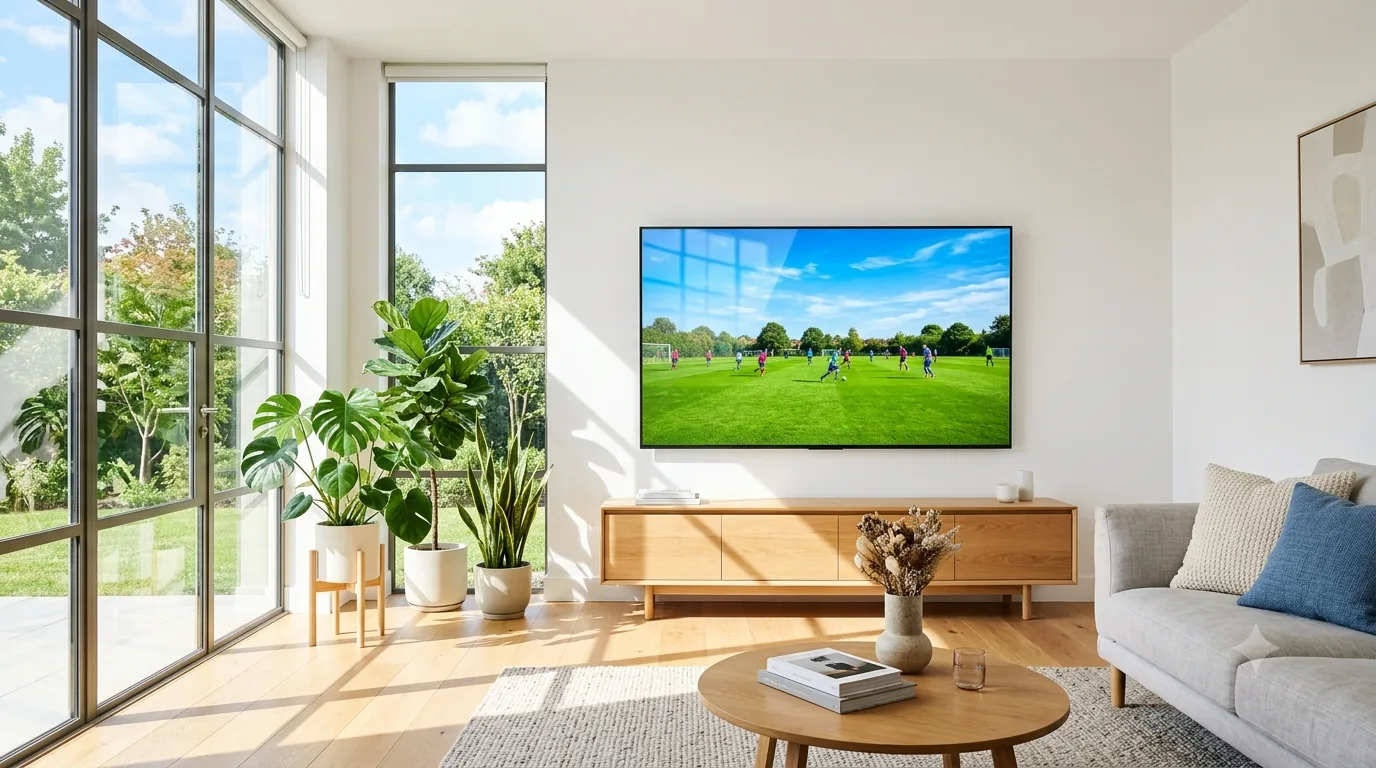
Best for Bright Rooms: Samsung QN90-series
Rooms with large windows, skylights, or bright overhead lighting are OLED's weak spot — even flagship OLEDs can look washed out competing against direct sunlight. This is where high-brightness mini-LED QLED TVs win decisively. Samsung's QN90-series tier is built around this exact scenario: very high peak brightness, an anti-glare coating tuned for reflective control, and Samsung's Tizen smart platform. It's the pick for a sunroom, an open-plan kitchen/living space, or anywhere you can't fully control ambient light.
Best Budget: Hisense U-series (or TCL Q-series)
Budget TVs have improved dramatically. What used to require a flagship price tag — full-array local dimming with hundreds of dimming zones, meaningful peak brightness, and 120Hz gaming support — is now available in the Hisense U-series and TCL Q-series budget tiers. You give up some picture processing refinement and premium smart-platform polish compared to Samsung or LG, but for a secondary room, a bedroom, or a first apartment, these sets deliver most of the visual experience for meaningfully less.
How to Choose: Quick Decision Guide
- Dedicated dark/dim room, want the best picture quality? → LG C-series OLED or Sony Bravia OLED
- Bright living room with lots of natural light? → Samsung QN90-series or TCL QM-series mini-LED
- Serious console gamer (PS5 / Xbox Series X)? → See our best TV for gaming guide
- Tight budget, secondary room? → Hisense U-series or TCL Q-series
- Torn between the two biggest brands? → See our Samsung vs LG showdown
Complete Your TV Setup
Full-Motion TV Wall Mount
A tilt-and-swivel mount fixes glare and off-angle viewing in ways no TV setting can — especially in bright or awkward-shaped rooms.
Shop on Amazon →Soundbar
Built-in TV speakers are thin and fire backward or downward. Even an entry-level soundbar is a bigger upgrade than most people expect.
Shop on Amazon →HDMI 2.1 48Gbps Cable
4K/120Hz, VRR, and eARC all depend on genuine HDMI 2.1 bandwidth. Older HDMI 2.0 cables silently cap you at 60Hz or drop features.
Shop on Amazon →Surge Protector
A power surge can kill a TV's main board instantly. A dedicated surge protector is cheap insurance for an expensive panel.
Shop on Amazon →Streaming Stick
Even smart TVs slow down after a couple of years. A current-generation streaming stick keeps the app experience fast and current.
Shop on Amazon →Microfiber Screen Cleaning Kit
Paper towels and glass cleaner can scratch or streak modern anti-glare coatings. A microfiber-and-solution kit is made for screens.
Shop on Amazon →Cable Management Kit
Wall-mounted TVs look unfinished with cables hanging loose — raceways and clips keep the whole setup tidy in an afternoon.
Shop on Amazon →Frequently Asked Questions
There is no single 'best' TV for everyone — it depends on your room and budget. For most living rooms with mixed lighting, a mid-range QLED or mini-LED set (think Samsung's QN90-series tier or TCL's QM-series tier) balances brightness and price well. For a dedicated, dimmer viewing room, a flagship OLED (LG C-series/G-series tier or Sony's Bravia OLED tier) delivers the best contrast and black levels. Budget shoppers do well with a mid-tier LED/QLED from Hisense or TCL.
OLED wins on contrast, black levels, and viewing angles because each pixel emits its own light and can turn fully off. QLED (LED backlighting plus a quantum-dot filter) wins on peak brightness, is generally more affordable at large sizes, and carries no burn-in risk. See our full OLED vs QLED comparison for the complete breakdown.
Budget tier gets you a solid 4K LED TV with basic smart features — fine for casual viewing. Mid-range tier adds mini-LED or entry QLED backlighting, better local dimming, and 120Hz gaming features. Flagship/premium tier gets you OLED or top-shelf mini-LED, the best processing, and full 4K/120Hz HDMI 2.1 gaming support across all ports. Prices shift constantly — check current listings on Amazon.
Almost always, yes. Modern TVs are thinner than ever, which leaves little room for speakers that fire toward the viewer with any real bass. A budget soundbar is one of the highest-impact upgrades you can pair with any TV on this list.
As a starting rule of thumb, divide your seating distance (in inches) by roughly 1.5 to 2 for a comfortable 4K viewing size — for example, an 8-foot (96-inch) couch distance suggests a TV in the 55-65 inch range for movies, or larger if you sit closer or want an immersive gaming setup. See our TV setup guide for the full viewing-distance breakdown.
Sources & Methodology
This guide draws from manufacturer specifications, current Amazon listings, and publicly available display testing from outlets like RTINGS and Wirecutter. We do not test units ourselves; picture-quality claims reflect the broad consensus of independent reviewers. Prices and exact model-year availability change frequently — always check the live listing on Amazon via the links above.
Last reviewed: July 19, 2026.